
Vaccinations
Vaccinations
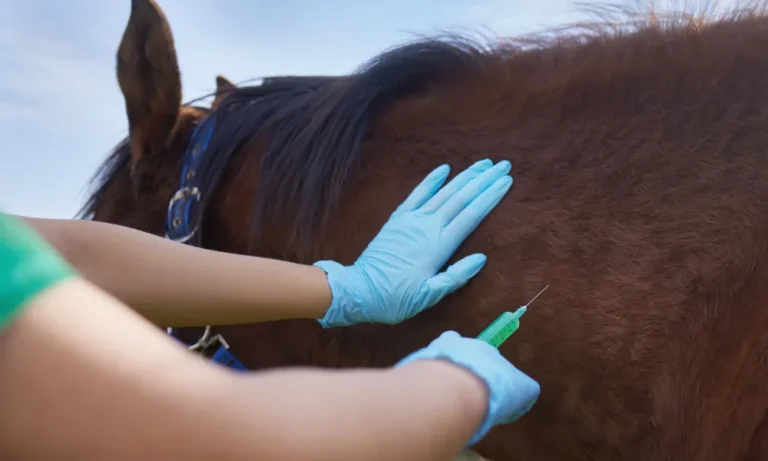
We advise that all horses are vaccinated against Equine Influenza and Tetanus. Vaccination protects them against life-threatening or severe illnesses.
Tetanus caused by the bacterium Clostridium tetani can be found in the soil and environment and infects horses through wounds (big and small). Tetanus is rarely transmitted between horses. Vaccination stimulates the horse’s immune system to produce antibodies. When the horse is infected with tetanus, they will fight off and neutralise the bacteria themselves. Sadly, if the horse becomes infected and ill with tetanus it is extremely challenging and costly to treat and often fatal. Horses who have wounds that are not vaccinated for Tetanus should be promptly seen by a vet to receive Tetanus antitoxin +/- antibiotics. The antitoxin is effective at neutralising the bacteria for approximately 2 weeks but is much more expensive and less effective than vaccination. Vaccination is the most effective, safe and cost-effective way to protect your horse from Tetanus.
Equine influenza is an infectious virus (passed from horse to horse) which causes severe upper respiratory tract infection. Infected horses may have a high temperature, cough, nasal discharge, difficulty breathing, dull, poor appetite. Unvaccinated horses may take much longer to recover and require more veterinary support and nursing. Vaccinated horses generally have milder symptoms and recover faster as well as reducing the amount of virus they shed and therefore are less likely to pass on the virus to another horse. We have sporadic well controlled outbreaks in the UK due to the high levels of vaccination.
- Vaccine 1: From 5 months of age
- Vaccine 2: 21-60 days after vaccine 1
- Vaccine 3: 150-180 days after vaccine 2
- Vaccine 4: Annual boosters should be maintained
Horses competing under FEI and other regulatory bodies may require 6 monthly vaccinations in order to compete. Please check the rules for the regulatory body under which you compete.